Solutions for Correlation Based Systems Engineering (CBSE)

QSLS ENGINEERING INC.
SYSTEMS ENGINEERING • INDEPENDENT TECHNICAL REVIEWS

Pick the Better Bid
Stop Guessing ...
QSLS helps agencies and evaluators measure which technical proposal actually aligns best with the RFP before award decisions are made.
No more subjective scoring.
No more “best guess” selections.
Just measurable alignment.

Built for complex technical procurements, aerospace systems, aviation, defense, and advanced solution evaluations.
Most proposal evaluations are still based on opinion.

Complex proposals often look equally strong on paper.
But evaluators are forced to compare:
-
Different writing styles
-
Different technical approaches
-
Different terminology
-
Different interpretations of the requirements
That creates risk.
One missed gap can cost millions in delays, rework, or failed delivery.
We help procurement teams compare proposals using a measurable system instead of subjective interpretation.
QSLS helps identify:
Technical gaps
Weak requirement alignment
Hidden execution risks
Overlooked deficiencies
Misaligned solutions
Before award decisions are made.
Measure complex proposals with scoring you can clearly defend.
Independent, quantitative evaluation support for source selection teams. Pricing scoped per requirement.
What You Get:
-
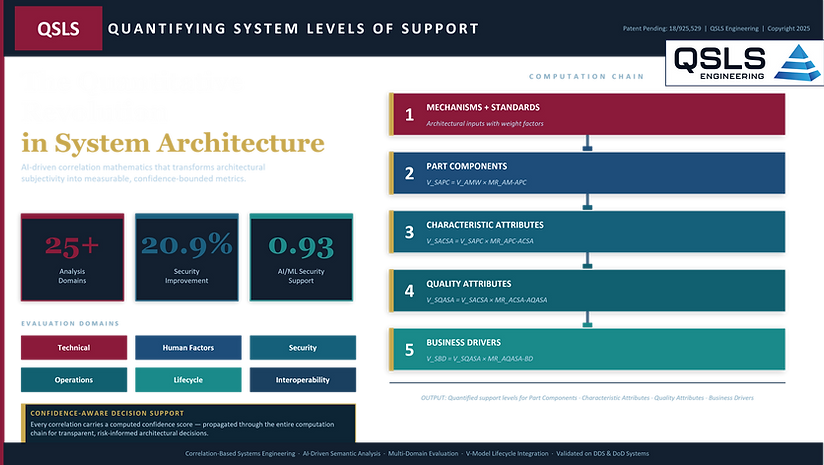
0–1 Fit Score for each proposal against RFP requirements
-
Confidence Level for every score
-
Gap Analysis showing where technical weaknesses exist
-
Clear, traceable findings that support defensible award decisions
-
MOSA and open architecture alignment measurement
How Pricing Works:
-
Per-evaluation pricing based on complexity and volume
-
Agency measurement partnerships available for recurring evaluation needs
-
Contact us to scope your requirement